

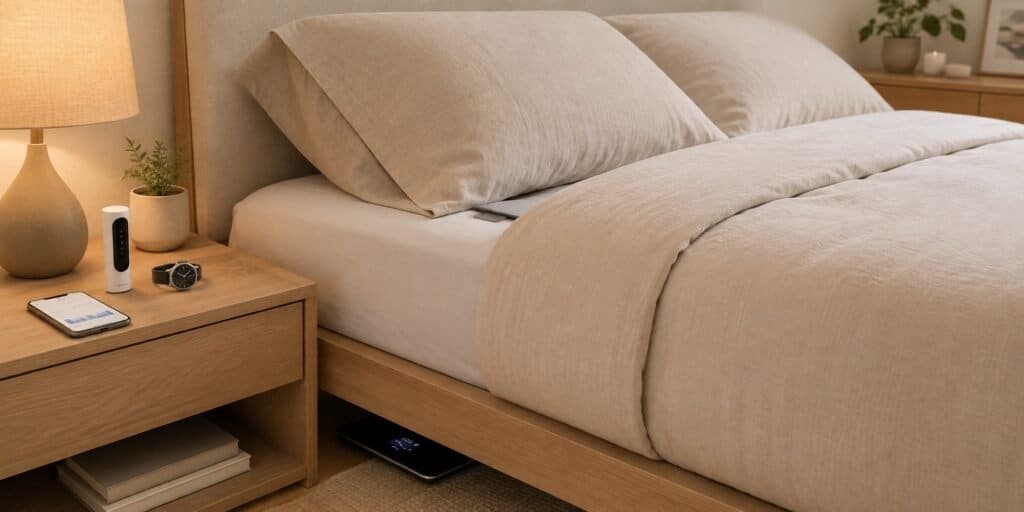
Health gadgets are easy to buy and surprisingly hard to keep using. A watch needs charging, a scale shows numbers you may not understand, and a blood pressure monitor often disappears into a drawer after the first week. Withings takes a quieter approach: devices designed to blend into routines you already have, then place the results in one app.
For this Withings review, we compared the brand’s current US lineup, specifications, buying terms, and independent health guidance. We focused on five products that solve different problems rather than five versions of the same gadget. The goal is not to decide whether more health data is always better. It is to show which device makes a useful habit easier, what the measurements mean in normal life, and where the technology should not be treated as a diagnosis.
Withings BodyFit also appears in our guide to the best wellness tech of 2026, but the full brand lineup makes more sense when the products are compared as one connected ecosystem.
What Is Withings?
Withings is a French connected-health company founded in 2008. It released its first Wi-Fi body scale in 2009, followed by connected blood pressure monitors, hybrid watches, sleep sensors, thermometers, and other home-health devices. Nokia acquired the company in 2016, and Withings founder Eric Carreel bought it back in 2018.
The brand’s strongest idea is not one sensor or one headline feature. It is continuity. Your weight, activity, heart data, sleep, temperature, and blood pressure can sit in the same Withings app instead of being split across several services. Automatic Wi-Fi syncing on devices such as the scales and BPM Vision also removes the need to open a phone every time you measure something.
Withings sits closer to health monitoring than sports performance. Garmin is better for maps, training load, and detailed workout screens. Apple Watch is better for apps, notifications, and phone features. Withings is best when you want a traditional-looking watch, a bathroom scale, or a home monitor to collect useful trends with as little friction as possible.
Most core measurements remain available without paying for Withings+. The optional subscription adds deeper coaching, readiness-style insights, programs, and selected expert services. That is a better model than locking every historical chart behind a paywall, but buyers should still check which advertised feature belongs to the free app and which sits inside the subscription.
Withings Review: The 5 Best Products in 2026
Withings sells several scales and watches, plus more specialized devices. We chose one product for each major use case so the list stays useful rather than turning into a catalog.
1. ScanWatch 2 – Best Overall Withings Device
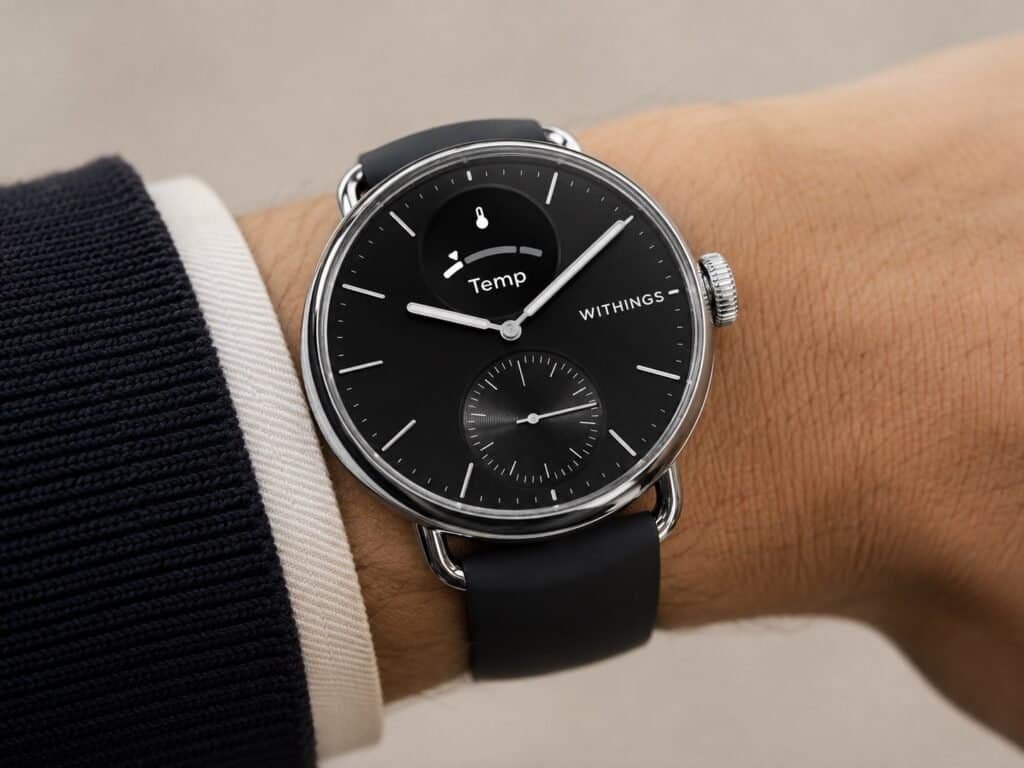
ScanWatch 2 is the easiest Withings product to recommend because it can collect useful data all day without looking like a small phone strapped to your wrist. It combines physical watch hands with a compact digital display, so the design feels closer to a normal analog watch than an Apple Watch or Garmin.
The health hardware includes a single-lead ECG, blood oxygen measurements, heart-rate tracking, overnight heart-rate variability, sleep tracking, and continuous temperature variation. It can automatically recognize common activities and offers more than 40 workout modes. The most practical specification is battery life: up to 35 days, depending on use. That changes behavior more than another app icon. You are more likely to capture complete sleep and recovery trends when the watch is not on a charger every night.
The trade-off is the same design choice that makes it appealing. The small screen is fine for a heart-rate value, timer, or notification preview, but poor for maps, long messages, music control, or detailed workout metrics while moving. There is no full smartwatch app store, and serious runners will get more training detail from Garmin, Coros, or Apple.
The ECG and oxygen features are best treated as screening and logging tools. A normal-looking result does not rule out a problem, and an unusual result needs context from a healthcare professional. Withings also notes restrictions for people with implanted electronic devices, so check the product guidance before buying for a specific medical concern.
Best for: people who want heart, sleep, and activity trends in a traditional watch with exceptionally long battery life.
Potential drawback: it is a health-focused hybrid watch, not a full smartwatch, and some finishes raise the price from $349.95 to $369.95.
Price: $349.95 | Shop ScanWatch 2 at Withings
2. BodyFit – Best Withings Smart Scale for Body Composition
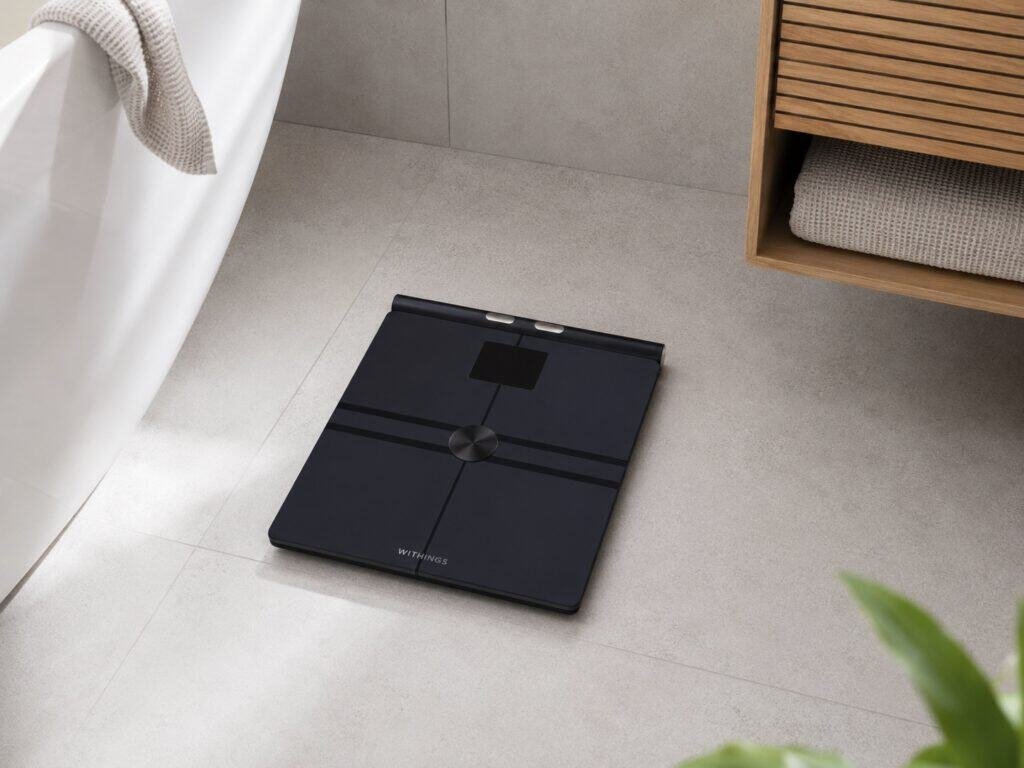
BodyFit is the model that makes the Withings scale range genuinely different. A standard smart scale sends a low electrical current from one foot to the other. BodyFit adds a retractable handle, creating more contact points so it can estimate fat and muscle distribution across the arms, legs, and trunk instead of treating the body as one block.
The 20-second scan produces more than 40 measurements and indicators, including weight, body-fat percentage, muscle mass, visceral fat, and segment-by-segment distribution. The scale supports up to eight users, syncs over Wi-Fi and Bluetooth, displays key results on its color screen, and is rated for users up to 440 pounds. Battery life is listed at up to one year.
Withings says its fat-mass results showed 99% correlation with DEXA in an internal comparative study. That sounds stronger than it is. Correlation describes how closely two sets of results move together; it does not mean every reading is 99% identical to a clinical scan. An independent study of consumer smart scales found that weight readings were generally useful, while body-composition estimates should not replace DEXA in patient care. The practical way to use BodyFit is to watch trends under similar conditions – same time of day, similar hydration, and similar meal timing – rather than treating one body-fat number as a laboratory result.
That still leaves a valuable product. Someone losing weight may want to see whether muscle is being maintained. A strength-training user may care more about left-to-right changes than total weight. A regular $50 scale cannot show those patterns. Someone who only wants a weekly weight trend, however, will get better value from the $129.95 Body Smart.
Best for: fitness, weight-management, or body-recomposition users who will act on long-term segmental trends.
Potential drawback: the extra measurements can create false precision, and the handle adds cost and a more deliberate weigh-in routine.
Price: $279.95 | Check the current BodyFit price at Withings
3. BPM Vision – Best for Home Blood Pressure Tracking
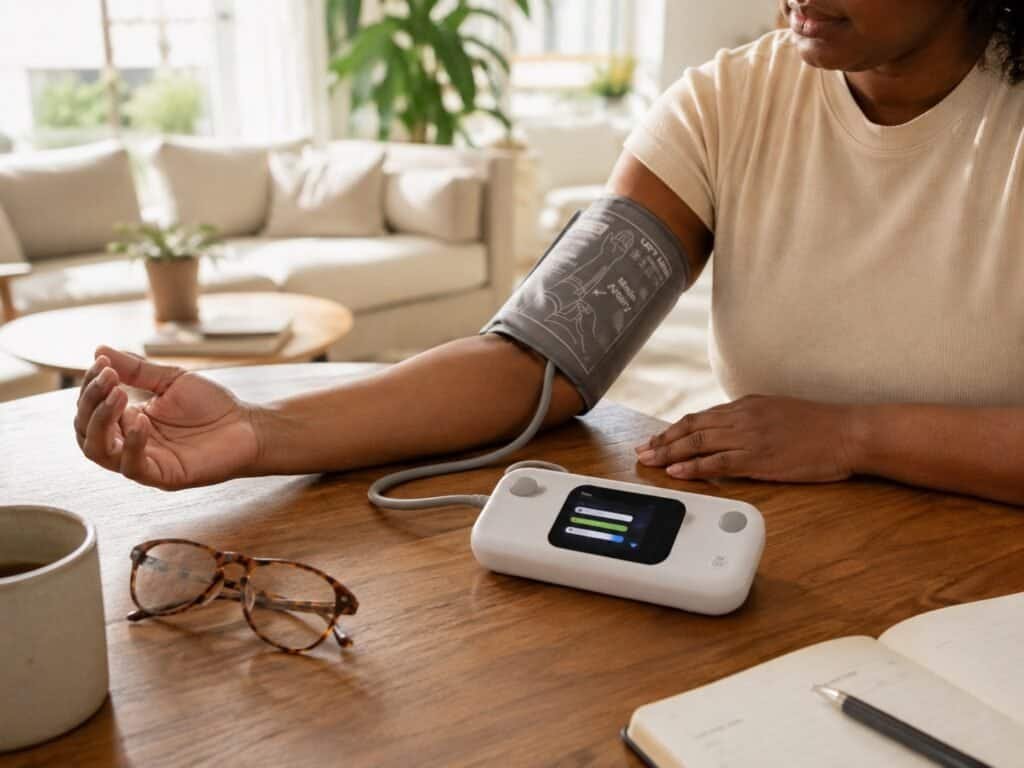
BPM Vision is designed to make a medically useful habit less awkward. The cuff includes a 2.8-inch color screen that guides placement and shows color-coded results without forcing you to find your phone. Measurements sync over Wi-Fi, and the device can keep separate histories for up to eight users.
It measures systolic pressure, diastolic pressure, and heart rate. TripleTrust mode takes three consecutive readings, which can reduce the temptation to accept whichever single number looks best. The rechargeable battery is rated for up to 12 months, so the monitor can stay ready in a drawer or on a bedside table.
The design also follows the right basic format. The American Heart Association recommends an automatic upper-arm cuff monitor for home use and emphasizes choosing the correct cuff size. BPM Vision includes a standard cuff for arms measuring roughly 8.7 to 16.5 inches. The optional XL cuff covers approximately 15.8 to 20.5 inches and currently costs $19.95.
Technique still matters more than the screen. Sit quietly, keep your back supported and feet flat, place the cuff on bare skin, and support the arm at heart level. A connected monitor cannot correct for talking, crossed legs, a full bladder, or a cuff that does not fit.
US shoppers should also read the regional feature list carefully. The current US product page lists blood pressure and heart rate; ECG is marked as Europe-only. That is an important distinction when comparing reviews written for different markets.
Best for: households that need repeatable upper-arm readings, automatic records, and easy sharing with a clinician.
Potential drawback: it is larger and more expensive than basic validated cuffs, and people outside the standard cuff range need the separate XL accessory.
Price: $179.95 | See BPM Vision at Withings
4. BeamO – Best Family Health and Telehealth Tool
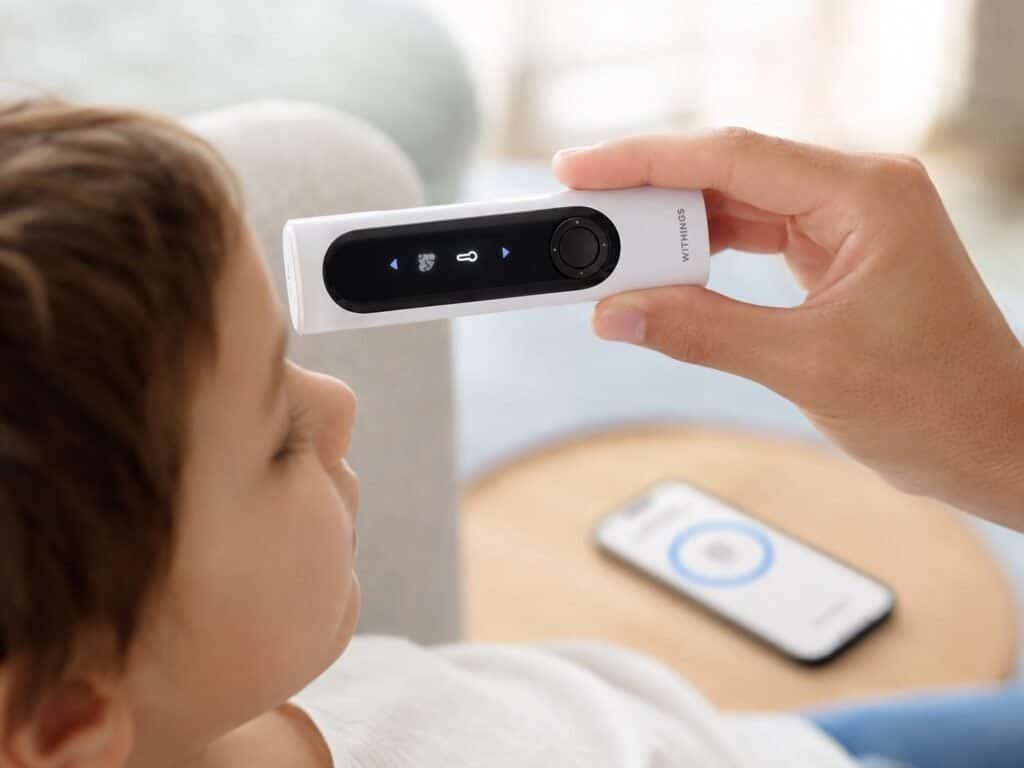
BeamO is the most ambitious device in the lineup. The 4-in-1 handheld combines a contactless thermometer, single-lead ECG, blood oxygen sensor, and digital stethoscope. A complete check can capture several vital signs in about a minute, while an ECG recording takes around 30 seconds.
For families, the value is consolidation. Instead of searching for a thermometer, pulse oximeter, and separate health records when someone feels unwell, BeamO keeps the tools and history together. The stethoscope can record heart and lung sounds for sharing during a telehealth appointment, and the device is small enough to travel with. Battery life is rated at up to eight months, with a one-hour USB-C charge.
The stethoscope is also the feature most likely to be misunderstood. BeamO can record sounds; it does not turn an untrained user into a clinician. Withings describes cardio-respiratory assessment as something performed by a healthcare professional. Feature availability can differ by country, and readings should be shared as supporting information rather than used to diagnose chest pain, breathing difficulty, or another urgent symptom at home.
BeamO makes more sense in a household that already uses telehealth, manages recurring respiratory issues with professional guidance, or wants one organized device for several family members. For occasional fever checks, a simple thermometer is faster and far cheaper.
Best for: tech-comfortable families who want several connected vital-sign tools in one portable device and will share the results with a professional when needed.
Potential drawback: it has a learning curve, some functions depend on regional approvals, and the most distinctive reading requires clinical interpretation.
Price: $249.95 | View BeamO at Withings
5. Withings Sleep – Best Sleep Tracker for People Who Hate Wearables
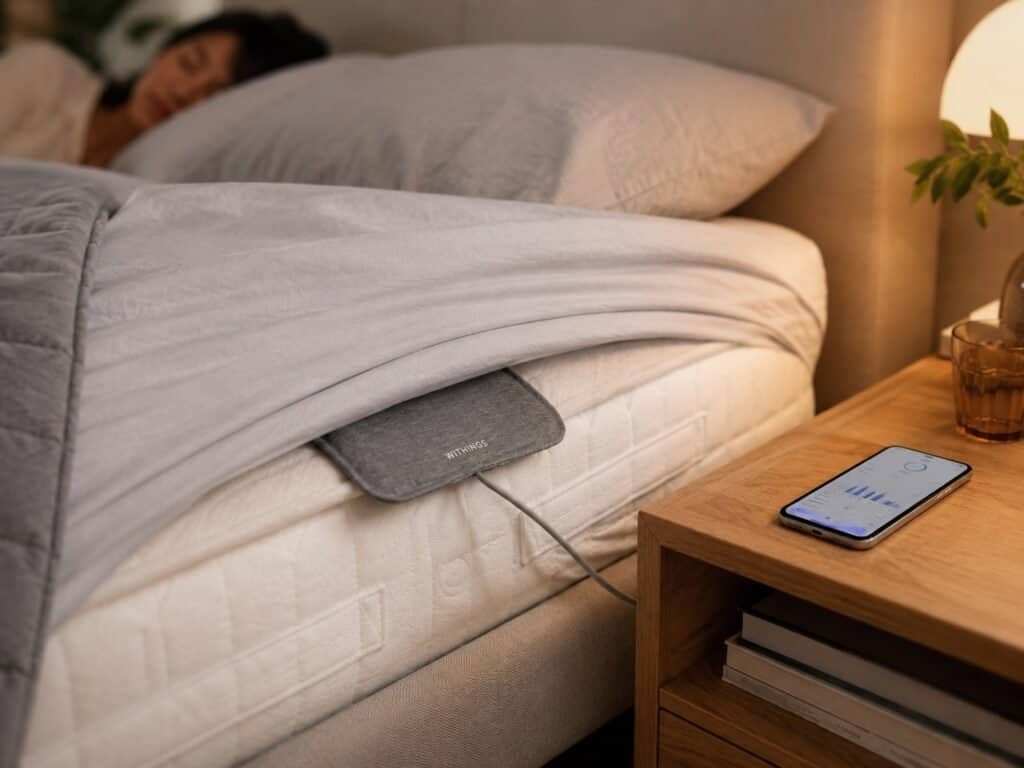
Withings Sleep solves one very specific problem: many people want sleep data but do not want to wear a watch or ring in bed. The flat sensor slides under the mattress and automatically tracks the person sleeping above it. There is nothing to press at night and nothing to recharge because it stays connected to power.
The sensor estimates sleep duration, bedtime and wake time, deep, light, and REM stages, overnight heart rate, snoring duration, and a combined Sleep Score. Results sync over 2.4 GHz Wi-Fi after setup. It works under most spring, foam, and latex mattresses, but Withings excludes waterbeds and air mattresses.
This is more convenient than a wearable, but less flexible. It tracks the sleeper directly above the sensor, so a couple who both want separate records will need one on each side. It also stays with the bed: travel, naps on the sofa, and nights elsewhere disappear from the history.
Sleep stages from a home sensor remain estimates. The most useful insights are usually simpler – whether bedtime is drifting, whether sleep duration is improving, and whether snoring has changed. Persistent loud snoring, gasping, severe daytime sleepiness, or suspected sleep apnea deserves medical evaluation rather than another month of app charts.
Best for: people who want automatic, long-term sleep trends and find watches or rings uncomfortable overnight.
Potential drawback: it only follows one bed position, cannot travel with your routine easily, and costs more than using a watch you already own.
Price: $199.95 | See Withings Sleep at Withings
Do You Need Withings+?
No Withings device on this list becomes useless without the subscription. Core measurements, device history, charts, and automatic syncing remain available in the Withings app. That matters because a scale, cuff, or watch should continue doing its basic job after the free trial ends.
Withings+ is the coaching layer. Depending on the device and region, it can add readiness-style summaries, guided programs, more interpretation, and selected expert services. It is most defensible for someone using several Withings devices and actively following a structured health goal. A person who only wants weight history or blood pressure records can skip it.
Check the checkout page and app before subscribing because included trials, feature bundles, and pricing can change. Also separate a useful prompt from a medical recommendation: app guidance can help organize habits, but it cannot diagnose a condition or replace a treatment plan.
Pros and Cons
Prons
- One app can combine weight, body composition, activity, sleep, temperature, heart data, and blood pressure.
- Several devices remove daily friction through automatic Wi-Fi syncing, long battery life, or no wearable at all.
- The designs feel like normal household objects and traditional watches rather than obvious medical equipment.
- Core measurements and historical data remain available without a mandatory Withings+ subscription.
- Multi-user support makes the scales, BPM Vision, and BeamO practical for households rather than one-person gadgets.
- The product range covers both general wellness trends and more structured home monitoring routines.
Cons
- The lineup is expensive: even the five products selected here range from $179.95 to $369.95 before accessories or subscriptions.
- Body composition, sleep stages, ECG screening, oxygen readings, and app interpretations can look more definitive than consumer data really is.
- Some features vary by region, so US buyers can encounter reviews that describe functions unavailable on the US model.
- Several products depend on 2.4 GHz Wi-Fi, app setup, correct positioning, or consistent technique; connected does not automatically mean effortless.
- The official refund policy gives a 30-day window, but it also says return shipping for a non-defective withdrawal may be the customer’s responsibility.
Who Is Withings Best For?
Withings is best for people who value consistency more than constant interaction. You step on the scale, wear a normal-looking watch, slide into bed, or take a blood pressure reading; the app builds the longer story in the background. That makes the ecosystem especially appealing to adults managing weight trends, sleep routines, blood pressure, or general heart-health data with professional guidance.
It is also a strong fit for households. Multiple profiles, automatic recognition, and one shared app reduce the clutter created by separate single-purpose gadgets. The more devices you use, the more valuable the unified timeline becomes.
Do not buy Withings because you want the most advanced sports watch, a large app-filled display, or the cheapest version of each device. Garmin and Coros are stronger for training; Apple Watch is stronger for smartwatch features; basic validated cuffs and scales cost much less. Withings earns its price when passive tracking, design, and an integrated health history matter every week.
It is also a poor fit for anyone likely to become anxious about small daily changes. Hydration, sleep, meals, stress, posture, and measurement technique can all move consumer readings. More metrics are helpful only when they support a clear decision or a calmer long-term trend.
Final Verdict: Which Withings Product Should You Buy?
ScanWatch 2 is the best starting point for most buyers. It tracks the widest range of everyday signals, looks like a normal watch, and its long battery life removes the biggest weakness of typical wearables. Buy it for quiet, continuous tracking – not for apps or serious training analytics.
BodyFit is the better first purchase when weight management or strength progress is the actual goal. Its segmental measurements are more informative than a basic scale, but the value comes from repeatable trends, not from treating every body-fat decimal as clinical truth.
BPM Vision is the most purposeful purchase on the list. If a clinician has asked you to monitor blood pressure at home, the guided screen, upper-arm design, multiple readings, and automatic history can support a consistent routine. BeamO and Sleep are more situational: excellent when their exact format solves a real problem, unnecessary when it does not.
The broader verdict is positive, with one condition. Withings makes unusually thoughtful health hardware, but no ecosystem can tell you what every number means for your body. Choose one device tied to a specific habit, use it consistently, and bring meaningful changes or concerning symptoms to a healthcare professional.
Explore the current Withings US lineup
Frequently Asked Questions
Is Withings a good brand?
Yes, especially for buyers who want connected health devices that work quietly in the background. The company has been making smart scales since 2009 and now offers one of the most cohesive ecosystems for weight, sleep, heart, and home-monitoring data. The main cautions are premium prices and the need to interpret consumer health metrics realistically.
Does Withings require a subscription?
No. Core device measurements, syncing, history, and standard charts are available in the Withings app without Withings+. The optional subscription adds coaching, deeper summaries, programs, and selected premium services, so it is easier to justify when you use several devices or follow a structured goal.
Which Withings scale is best?
BodyFit is the strongest choice for detailed body-composition trends because its handle measures through more of the body and adds segmental analysis. Body Smart is the better value for ordinary weight, fat, muscle, and metabolic trends. Body Scan costs more and is aimed at buyers who specifically want its more advanced heart and nerve-related features.
Is ScanWatch 2 better than Apple Watch?
It is better for battery life, traditional watch styling, and low-distraction health tracking. Apple Watch is better for apps, notifications, navigation, workout screens, and integration with an iPhone. The right choice depends on whether you want a health watch that fades into the background or a small connected computer on your wrist.
Are Withings readings medically accurate?
Accuracy depends on the device, the metric, fit, technique, and intended use. Weight and properly taken blood pressure readings can support useful home records, while body composition and sleep stages are better treated as estimates and trends. ECG, oxygen, temperature, and other readings may support screening or sharing, but they do not replace diagnosis, emergency care, or professional interpretation.


