

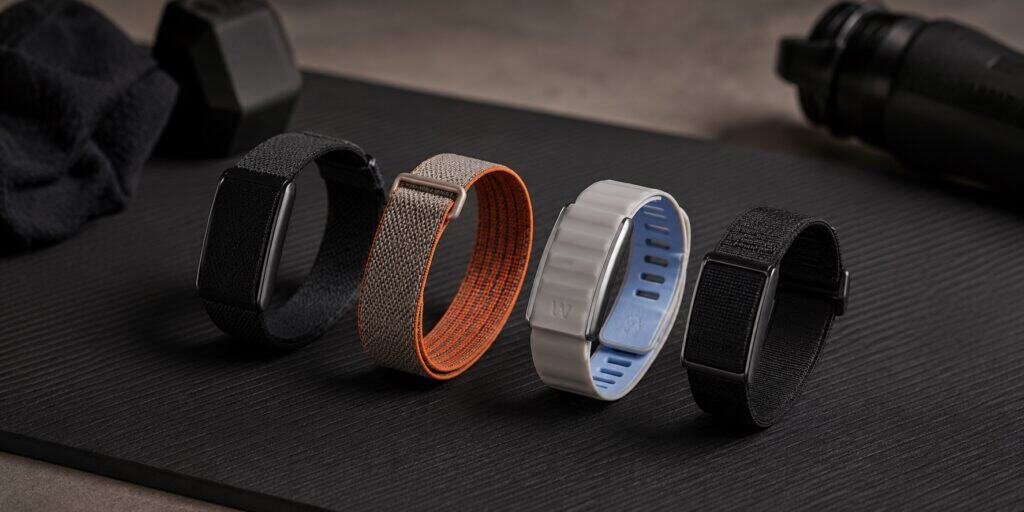
Fitness trackers have spent years adding brighter displays, more notifications, and increasingly complex menus. The latest wearable trend goes in the opposite direction: remove the screen, collect the useful data quietly, and let people check it when they are ready.
A screen-free fitness tracker still records steps, heart rate, sleep, workouts, and recovery. What it does not do is ask for attention every time a message arrives or encourage you to stare at another dashboard while exercising.
That simpler approach now has support from several major brands. Garmin has entered the category with the new CIRQA Smart Band, Google offers the affordable Fitbit Air, and established options from WHOOP, Polar, and Amazfit cover everyone from casual walkers to performance-focused athletes.
We compared current US pricing, published specifications, app features, battery life, subscription terms, and independent testing. The goal is not to identify the tracker with the longest feature list. It is to show which one gives you information you will actually use.
For a broader look at devices that track sleep, body composition, recovery, and everyday health, see our guide to the top wellness tech of 2026.
Quick Picks
| Tracker | Best For | Battery Life | Subscription | Price |
| Garmin CIRQA | Best overall | Up to 10 days | Not required | $199.99 |
| Google Fitbit Air | Beginners and everyday health | Up to 7 days | Optional | From $99.99 |
| WHOOP 5.0 | Serious training and recovery | 14+ days | Required | From $199/year |
| Polar Loop | Subscription-free recovery tracking | Up to 8 days | Not required | $169.99 |
| Amazfit Helio Strap | Budget performance tracking | Up to 10 days | Not required | $99.99 |
What Is a Screen-Free Fitness Tracker?
A screen-free fitness tracker is a wearable band that collects health and activity data without displaying it on your wrist. Instead of checking pace, messages, or recovery scores directly on the device, you open the accompanying phone app.
Most models use an optical heart-rate sensor, accelerometer, temperature sensor, and related hardware to monitor movement and physiological changes. The app then turns those readings into metrics such as sleep stages, resting heart rate, training load, recovery time, or daily readiness.
Removing the display brings three practical advantages. First, battery life is normally much longer than on a smartwatch. Second, the device can be lighter and more comfortable for sleeping. Third, there are no notifications competing for your attention during work, exercise, or rest.
The compromise is equally clear: you cannot glance at your wrist for the time, live pace, maps, messages, or detailed workout statistics. A screenless band is a passive tracker, not a full smartwatch.
The 5 Best Screen-Free Fitness Trackers in 2026
1. Garmin CIRQA – Best Overall Screen-Free Fitness Tracker
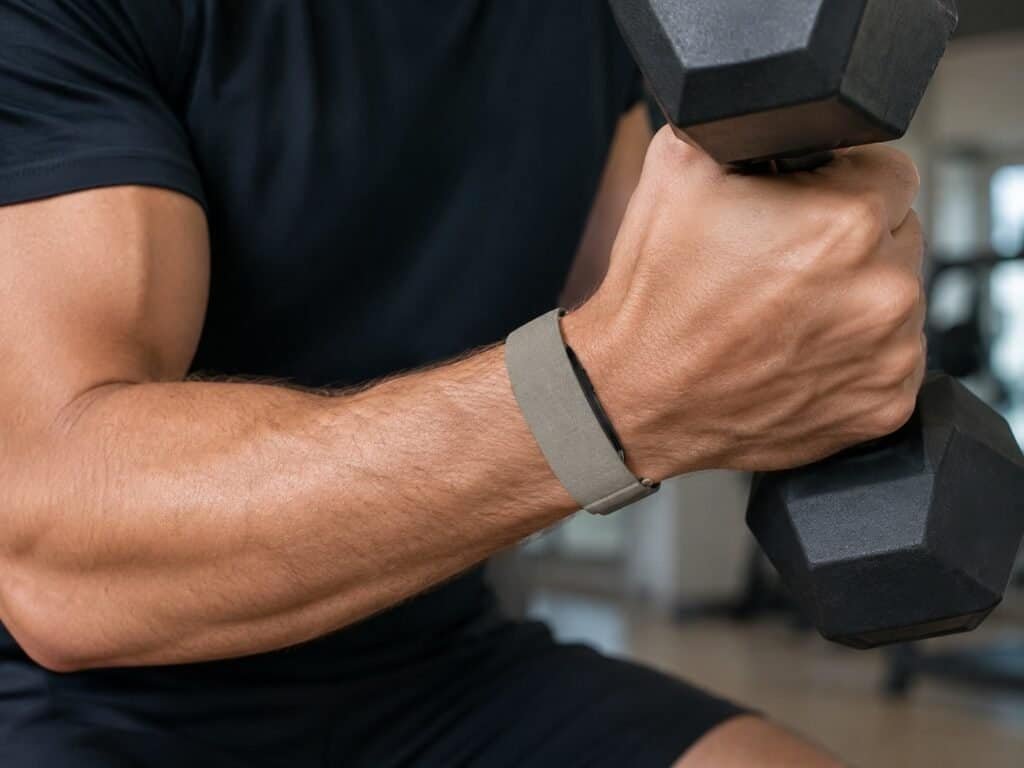
Garmin CIRQA is the strongest all-round choice because it combines the quiet design of a screen-free band with much of the training intelligence normally found on Garmin watches.
It tracks more than 80 activities, including running, walking, cycling, strength training, and yoga. The band can automatically recognize some movement, or you can start a favorite activity using the single side button.
The important part is what happens after the workout. Garmin Connect can show Training Readiness, HRV Status, VO2 max, Training Status, workout benefit, and estimated recovery time.
These terms can sound more complicated than they are. Training Readiness combines recent sleep, recovery, stress, and exercise load to estimate whether today is a good day for a hard session. Training Status looks at your recent pattern over a longer period and helps indicate whether your workouts are improving fitness, maintaining it, or creating too much fatigue.
CIRQA also includes Garmin’s Body Battery score. This estimates how much energy you have available by combining activity, stress, rest, and sleep. It is not a literal measurement of energy, but it can help explain why the same workout feels easy one day and unusually difficult the next.
For outdoor activities, CIRQA uses connected GPS. That means it borrows location data from a nearby smartphone rather than carrying a GPS chip inside the band. You can still record a mapped run or ride, but you need to bring your phone.
Health tracking covers heart rate, Pulse Ox, stress, skin temperature, menstrual-cycle information, sleep stages, naps, respiration, and overnight HRV. Battery life is rated for up to 10 days, and the fabric band can be worn on the wrist or upper arm.
The main limitation is that CIRQA does not replace a Garmin running watch. You cannot see live pace, distance, heart-rate zones, maps, or structured workout instructions on your wrist. Serious runners may still prefer a Forerunner, while hikers and cyclists may need a watch with built-in GPS and navigation.
CIRQA makes more sense for someone who wants Garmin’s recovery and training ecosystem but does not want to wear a conventional smartwatch all day.
Best for: Garmin users, recreational athletes, gym training, sleep tracking, and anyone who wants advanced metrics without a required subscription.
Skip it if: You need live workout statistics, built-in GPS, navigation, music, or smartwatch features.
Price: $199.99 | Check the current Garmin CIRQA price
2. Google Fitbit Air – Best for Beginners
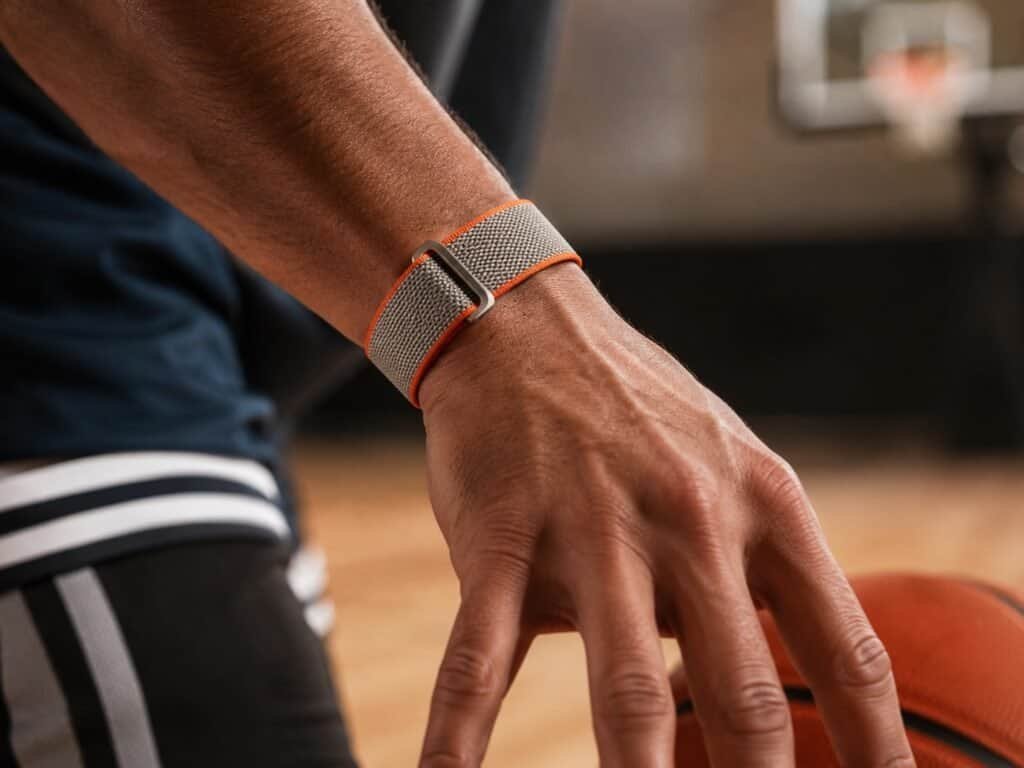
Google Fitbit Air is the easiest entry point into screen-free fitness tracking. At $99.99, it costs roughly half as much as Garmin CIRQA and considerably less than a year of WHOOP membership.
The band automatically tracks heart rate, steps, distance, calories burned, and Active Zone Minutes. It also records sleep duration and stages, resting heart rate, breathing rate, blood oxygen trends, HRV, and changes in skin temperature.
For an ordinary user, the most useful features are likely to be Sleep Score, Cardio Load, and Readiness.
Sleep Score summarizes how long and how consistently you slept. Cardio Load estimates the amount of cardiovascular effort accumulated through exercise and daily movement. Readiness then considers recent activity and recovery to suggest whether you should train normally, reduce the intensity, or prioritize rest.
You do not need a premium subscription to see the basic activity, health, sleep, Cardio Load, and Readiness information. Google Health Premium adds a Gemini-powered coach, adaptive fitness plans, more detailed sleep guidance, a workout library, and proactive recommendations.
Three months of Premium are included with a new tracker, but the added coaching is not necessary for basic tracking. That distinction matters because it lets a beginner try the more advanced service without making the device useless after canceling.
Fitbit Air also looks for possible signs of atrial fibrillation while the wearer is still or sleeping. As with any consumer wearable alert, this is a screening feature rather than a diagnosis.
The design is light, narrow, and intended for continuous use through work, exercise, and sleep. Battery life reaches approximately one week, which is enough to make overnight tracking practical without creating a daily charging routine.
The trade-off is depth. Fitbit Air is useful for understanding general activity and recovery, but it does not provide Garmin’s broad training toolkit or WHOOP’s detailed performance coaching. Google also requires a compatible smartphone and Google account, and the most personalized AI guidance belongs to the paid Premium plan.
Best for: Beginners, walkers, general fitness, sleep tracking, and buyers who want a low initial price.
Skip it if: You want deep running metrics, detailed strength-training analysis, live heart-rate broadcasting, or a fully subscription-free coaching experience.
Price: From $99.99 | Buy Google Fitbit Air from the Google Store
3. WHOOP 5.0 – Best for Serious Training and Recovery
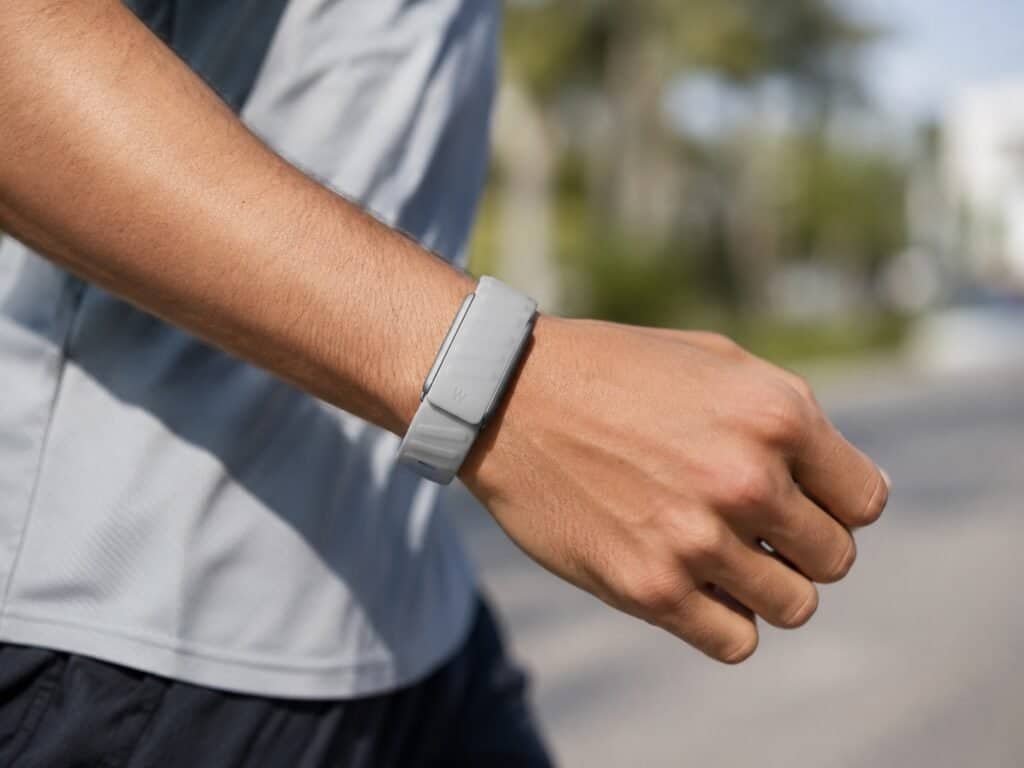
WHOOP helped establish the modern screen-free tracker category. Unlike most wearables, it is not primarily concerned with steps, notifications, or encouraging people to close simple activity rings. The system revolves around three connected ideas: Strain, Recovery, and Sleep.
Strain measures how much cardiovascular and muscular stress you accumulate. Recovery uses metrics including HRV, resting heart rate, sleep, and respiratory rate to estimate how prepared your body is for more effort. Sleep planning then suggests how much rest may be needed based on recent activity and sleep debt.
This approach works particularly well for people who train repeatedly throughout the week. A runner, cyclist, CrossFit athlete, or competitive team-sport player may use the recovery score to decide whether to complete a difficult session, reduce the intensity, or rest.
WHOOP 5.0 lasts more than 14 days between charges and is designed for continuous wear. Depending on the membership tier, it also supports VO2 max, heart-rate zones, Strength Trainer, Hormonal Insights, Healthspan features, Stress Monitor, and other long-term health tools.
The entry-level WHOOP One membership costs $199 per year and includes the WHOOP 5.0 device with core fitness and recovery features. WHOOP Peak costs $239 per year and adds deeper health and longevity information. WHOOP Life costs $359 per year, includes WHOOP MG hardware, and adds features such as ECG and blood-pressure insights.
The annual model is both WHOOP’s strength and its biggest problem. There is no large hardware purchase followed by years of free use. Instead, the device and service are tied together. Stop paying, and much of the reason to own WHOOP disappears.
That can still be worthwhile for someone who changes training decisions based on the data. For a person who checks the app twice, loses interest, and returns to the same routine, it becomes an expensive fabric band.
WHOOP 5.0 remains one of the clearest examples of a wearable translating recovery data into a practical daily decision rather than simply presenting another dashboard.
Best for: Competitive athletes, endurance training, CrossFit, HYROX, team sports, and people who consistently adjust workouts around recovery.
Skip it if: You dislike annual subscriptions, mainly want step counting, or only exercise a few times per month.
Price: From $199 per year | Compare WHOOP membership plans
4. Polar Loop – Best Subscription-Free WHOOP Alternative
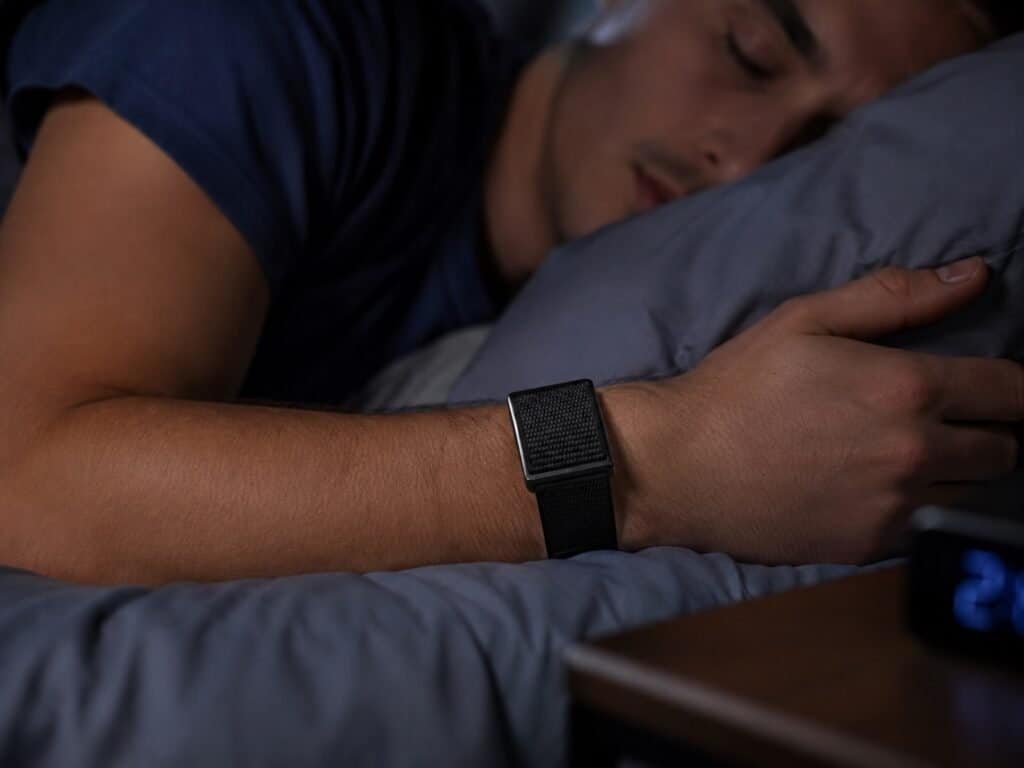
Polar Loop sits between Fitbit Air and Garmin CIRQA. It provides more serious training and recovery tools than a basic activity tracker, but it avoids WHOOP’s mandatory annual membership.
The band tracks heart rate, steps, daily activity, sleep, and workouts. Polar’s Nightly Recharge feature looks at how well your body recovered during the first hours of sleep. Sleep Plus Stages breaks the night into light, deep, and REM sleep, while SleepWise estimates how sleep may affect alertness and performance during the following day.
For training, Polar includes Training Load Pro, automatic activity detection, Fitness Test, and Energy Sources. The last feature estimates how much of a workout’s energy came from carbohydrates, protein, and fat. It should not be treated as laboratory-level metabolic testing, but it can add context when comparing easy endurance sessions with harder efforts.
Polar Loop can record workouts automatically or be started through the Polar Flow app. The band stores up to four weeks of information and lasts up to eight days between charges.
At approximately one ounce, it is light enough for sleep and continuous wear. The WR30 rating makes it suitable for swimming, although it is less water-resistant than the 5 ATM Amazfit Helio Strap.
The Polar Flow app is the biggest reason to choose Loop. Polar has spent decades building tools for heart-rate and endurance training, and its recovery language is generally more sport-focused than Fitbit’s broader lifestyle approach.
The downside is that the experience can feel less immediate than WHOOP. WHOOP is designed around one highly polished daily recovery narrative, while Polar presents more individual measurements and training tools. New users may need time to understand what Nightly Recharge, Training Load Pro, and SleepWise are telling them.
Polar Loop is the better long-term value, however. After the initial purchase, the core features remain available without a monthly fee.
Best for: Runners, cyclists, gym users, existing Polar customers, and buyers who want recovery guidance without annual payments.
Skip it if: You want the simplest possible app, need detailed metrics on your wrist during exercise, or prefer Google’s broader health ecosystem.
Price: $169.99 | See the latest Polar Loop price
5. Amazfit Helio Strap – Best Budget Performance Tracker
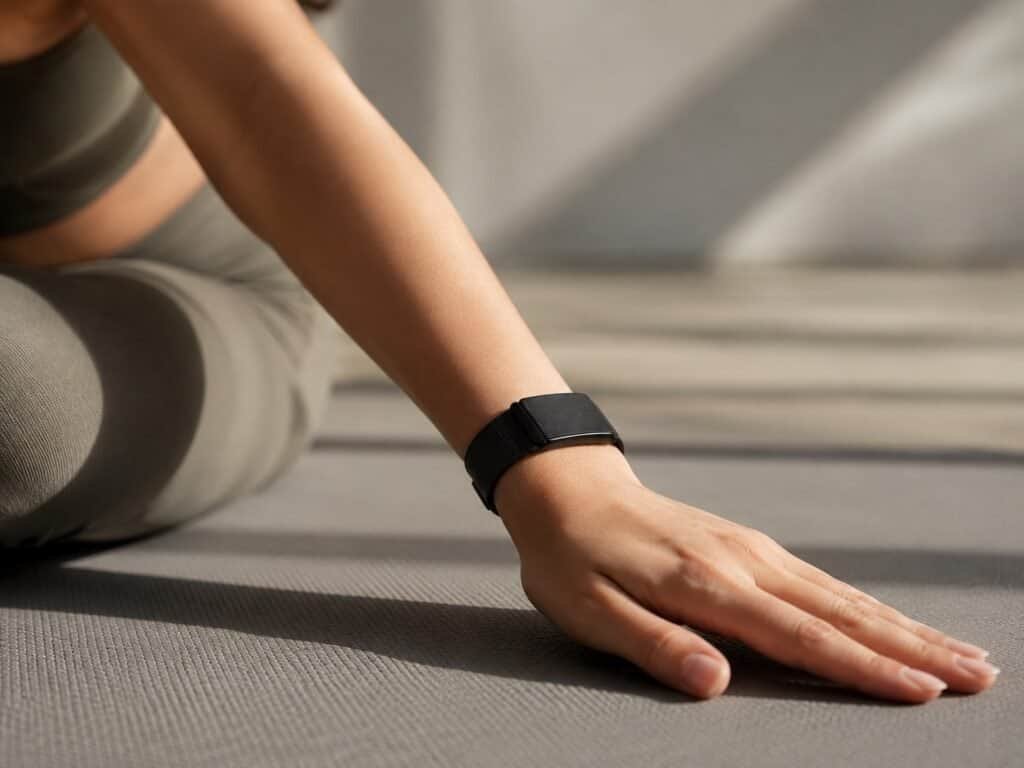
Amazfit Helio Strap costs the same as Fitbit Air, but the two products target different people. Fitbit Air focuses on easy everyday health tracking. Helio Strap is designed more directly around workouts, heart rate, and recovery.
It can be worn on the wrist for sleep and general activity or moved to the upper arm during exercise. The upper-arm position is useful because it can reduce some of the movement interference that affects optical wrist sensors during strength training, cycling, and high-intensity intervals.
The band records heart rate every second and can broadcast the live reading through Bluetooth to compatible watches, cycling computers, treadmills, gym equipment, and fitness apps. That gives it a practical advantage over passive bands that only show information after syncing.
Helio Strap supports more than 50 sport modes, including strength training and HYROX-style workouts. The Zepp app adds VO2 max estimates, training load, training effect, recovery time, sleep stages, overnight HRV, stress, blood oxygen, and BioCharge energy information.
Battery life reaches up to 10 days, the device weighs approximately 20 grams, and its 5 ATM water-resistance rating is suitable for sweat, showers, and shallow-water swimming.
The core app does not require a subscription. Data can also sync with platforms including Strava, TrainingPeaks, Apple Health, Google Fit, adidas Running, komoot, and Relive, although integrations may differ by platform and region.
At $99.99, the specification list is unusually strong. The compromise is software polish and availability. Garmin, Fitbit, Polar, and WHOOP have larger user bases and more established coaching systems. Amazfit provides a lot of information, but the app may require more interpretation, and current stock can vary.
Optical upper-arm tracking is also not identical to an electrical chest strap. It is more comfortable for many workouts, but athletes who need the most reliable rapid heart-rate response for intervals may still prefer a Polar H10 or another chest sensor.
Best for: Strength training, HYROX, indoor cycling, gym equipment, live heart-rate broadcasting, and budget-conscious athletes.
Skip it if: You want the most refined recovery app, guaranteed local availability, or chest-strap-level responsiveness during every high-intensity session.
Price: $99.99 | Check Amazfit Helio Strap availability
How to Choose: Answer These Three Questions
The five trackers overlap, but the buying decision becomes much easier when you answer three questions.
1. How Seriously Do You Train?
For walking, sleep, basic activity, and general wellness, Fitbit Air provides enough information for most people.
For regular running, cycling, strength training, or mixed workouts, Garmin CIRQA and Polar Loop add more meaningful training-load and recovery tools.
For athletes making daily decisions around performance, WHOOP offers the deepest coaching experience. Amazfit Helio Strap is the budget alternative for people who care more about workout heart rate and recovery than lifestyle features.
2. Are You Willing to Pay Every Year?
WHOOP should only be considered if the annual service is part of the value you want. Its hardware, app, coaching, and membership operate as one product.
Garmin, Polar, and Amazfit provide their core fitness and recovery features without mandatory subscriptions.
Fitbit Air also works without Premium, although Google reserves its Gemini coach, adaptive plans, and deeper guidance for paying members.
A cheaper device is not automatically the better value. But a subscription becomes expensive when the user stops engaging with the insights.
3. Do You Need Information During the Workout?
A screen-free tracker is designed to be checked later. It will not replace a running watch when you need to see pace, distance, intervals, navigation, or heart-rate zones while moving.
Garmin CIRQA can map outdoor workouts through a connected phone, but it cannot display live information. Polar Loop follows a similarly passive approach.
Amazfit Helio Strap can broadcast heart rate to another device, which makes it more useful with gym machines, cycling computers, and compatible watches.
Anyone who needs maps, music, lap controls, or structured workout instructions should buy a smartwatch or sports watch instead.
How Accurate Are Screen-Free Fitness Trackers?
Screen-free bands use many of the same optical sensors found in smartwatches. Removing the display improves comfort and battery life, but it does not automatically make the measurements more accurate.
Heart-rate readings are generally most useful for resting trends, steady movement, and longer workouts. Fast intervals, gripping weights, cold weather, tattoos, loose fit, and repeated wrist movement can make optical readings less reliable.
An independent comparison of Garmin CIRQA, WHOOP, Fitbit Air, Polar Loop, and Amazfit Helio Strap shows why the type of exercise and fit matter as much as the feature list.
Sleep stages, calorie expenditure, recovery scores, and VO2 max are also estimates produced by algorithms. Their greatest value comes from comparing your own patterns over time, not treating one number as a laboratory result.
The British Heart Foundation guidance on fitness trackers similarly notes that accuracy varies by device, measurement, and activity intensity.
Use these bands to identify patterns, support consistency, and ask better questions. Do not use them to diagnose a medical condition or ignore symptoms because an app produced a normal-looking score.
Readers more interested in weight, blood pressure, ECG, or under-mattress sleep tracking can also see our full Withings review.
Pros and Cons of Screen-Free Fitness Trackers
Pros
- Longer battery life than most full smartwatches
- Comfortable design for sleep and 24/7 wear
- No notifications or glowing screen
- Detailed health and recovery trends in the phone app
- Easier to wear alongside a traditional watch
- Several strong options without mandatory subscriptions
Cons
- No live pace, maps, time, or workout information on the wrist
- Most functions depend heavily on a smartphone app
- Recovery and sleep scores are estimates, not diagnoses
- Optical heart-rate accuracy can fall during certain exercises
- Some platforms place their best coaching behind subscriptions
- More data does not help unless the user changes something
Who Should Buy a Screen-Free Fitness Tracker?
A screen-free tracker is a good fit for someone who wants to understand sleep, activity, and recovery without wearing a miniature phone.
It works particularly well for people who already wear a mechanical watch, dislike notifications, find smartwatches distracting, or want a lighter device for sleeping.
It can also make sense as a second wearable. A cyclist might use a bike computer during training and a screenless band for recovery. A runner might wear a Garmin watch for workouts and CIRQA at night. A strength athlete could use an upper-arm Helio Strap when a wristwatch gets in the way.
A screen-free band is less suitable for someone who constantly checks pace, follows maps, controls music, answers messages, or completes guided workouts from the wrist.
It is also unnecessary for a person who only wants a basic step count. A phone or inexpensive conventional fitness band may already do enough.
Final Verdict
Garmin CIRQA is the best screen-free fitness tracker for most active users. It combines strong sleep and health tracking with more than 80 activities, useful training metrics, 10-day battery life, and no mandatory subscription.
Fitbit Air is the better starting point for beginners. It covers the essentials, costs $99.99, and keeps its core tracking features available without Premium.
WHOOP 5.0 remains the strongest choice for athletes who want detailed recovery coaching and will genuinely use it. Its annual membership is difficult to justify for casual exercise, but it can be valuable when the data changes how someone trains.
Polar Loop is the best subscription-free WHOOP alternative. It offers credible sleep, recovery, and training tools for a single upfront price.
Amazfit Helio Strap delivers the most workout-focused hardware for $99.99, particularly for upper-arm heart-rate tracking, strength training, and live broadcasting. The app is less polished than the category leaders, but the value is difficult to ignore.
The best screen-free tracker is not the one that records the most measurements. It is the one comfortable enough to wear consistently, simple enough to understand, and useful enough to change what you do next.
Frequently Asked Questions
What is the best screen-free fitness tracker in 2026?
Garmin CIRQA is the best overall option. It offers up to 10 days of battery life, more than 80 activity profiles, advanced training and recovery metrics, connected GPS, and no mandatory subscription. Fitbit Air is a better choice for beginners, while WHOOP 5.0 provides deeper coaching for serious athletes.
What is the best WHOOP alternative without a subscription?
Garmin CIRQA is the strongest overall alternative because it combines health, sleep, recovery, and advanced training metrics without annual fees. Polar Loop is another good option for sleep and endurance-focused recovery information. Amazfit Helio Strap is the more affordable choice for workout heart rate and training load.
Can a screen-free tracker replace a smartwatch?
It can replace a smartwatch for passive health, activity, sleep, and recovery tracking. It cannot replace one for notifications, maps, live pace, music, calls, apps, or detailed on-wrist workout information.
Do screen-free fitness trackers have GPS?
Many do not include a dedicated GPS chip. Garmin CIRQA uses connected GPS from a compatible smartphone. For runners and cyclists who want to record routes without carrying a phone, a sports watch with built-in GPS is usually the better choice.
Do you need a subscription for a screen-free fitness tracker?
WHOOP requires an active annual membership. Garmin CIRQA, Polar Loop, and Amazfit Helio Strap do not require subscriptions for their core features. Fitbit Air includes basic tracking for free, while Google Health Premium adds AI coaching and more detailed guidance.
Are screen-free fitness trackers accurate?
They are useful for tracking trends in steps, resting heart rate, sleep duration, and general exercise load. Accuracy can vary during high-intensity movement, strength training, and activities involving repeated wrist motion. Sleep stages, calories, readiness, and recovery scores should be treated as estimates rather than clinical measurements.


